 How-to
Agricultural Insurance Coverage for Small Farms
Last Updated: October 23, 2026
Quick Summary
Agricultural insurance coverage is protection designed specifically for farm operations that protects your farm property, equipment, crops, and liability from unexpected losses. Unlike homeowners or standard commercial policies, agricultural insurance coverage addresses the unique risks farmers face, including weather events, equipment damage, and liability claims.
- Agricultural insurance coverage protects farm buildings, equipment, crops, and livestock that homeowners and commercial policies exclude entirely.
- Farm liability coverage protects you when someone is injured on your property or your farm operations damage a neighbor's property.
- Crop insurance through the federal Risk Management Agency protects against weather-related losses like drought, hail, and frost.
- Your premium depends on farm size, type of farming, location, loss history, coverage choices, and agritourism activities.
- Start building coverage by listing assets, identifying farm activities, assessing liability exposures, evaluating gaps, and working with an experienced agent.
Table of Contents
- What Agricultural Insurance Coverage Means for Small Farms
- How Farm Insurance Differs From Homeowners and Commercial Policies
- Core Coverage Areas: Property, Buildings, and Equipment
- Farm Liability Insurance: Protecting Against Injury and Damage Claims
- Crop Insurance for Small Farms: Coverage and Causes of Loss
- Livestock Coverage and Revenue Protection Options
- Farm Insurance Cost: What Affects Your Premium
- Building Your Coverage Checklist: A Practical Framework
- Frequently Asked Questions
What Agricultural Insurance Coverage Means for Small Farms
Agricultural insurance coverage is protection designed specifically for farm operations. It protects your farm property, equipment, crops, and liability from unexpected losses. Unlike homeowners or standard commercial policies, agricultural insurance coverage addresses the unique risks farmers face.
Running a small farm means managing multiple exposures at once. You have buildings, machinery, livestock, and crops all at risk. A single weather event or accident can threaten your entire operation. That's where the right agricultural insurance coverage becomes essential.
At Countryside Insurance Agency, we work with farmers to understand these distinct risks. We help small farm owners build coverage that actually matches their operation, not a generic package.
Most small farms operate with thin margins. One major loss can be devastating. Agricultural insurance coverage gives you the financial cushion to recover and rebuild.
How Farm Insurance Differs From Homeowners and Commercial Policies
Your home is protected by homeowners insurance. Your retail store is covered by commercial general liability. But farm insurance operates differently because farms are different.
Homeowners policies exclude farm operations entirely. They won't cover crop loss, livestock, or farm equipment. Commercial policies are built for offices and retail spaces, not barns and fields.
The key difference is scope. A homeowners policy protects a residence and its contents. A farm insurance policy protects multiple structures, equipment, animals, and the crops themselves.
Here's where it matters in practice: if a visitor is injured in your barn, homeowners insurance won't cover it. If your tractor is damaged, a standard commercial policy won't help.
Agricultural insurance coverage also recognizes that farms operate year-round in unpredictable conditions. Severe weather, equipment failure, and animal illness are constant threats.
Core Coverage Areas: Property, Buildings, and Equipment
Farm insurance typically includes several core coverage areas. Understanding each one helps you identify gaps in your protection.
Property coverage protects your farm buildings and structures. This includes your house, barns, sheds, grain storage, and fencing.
Liability coverage protects you when someone is injured on your farm or damaged by your farm operations.
Equipment coverage protects your machinery and tools. Tractors, combines, hay balers, and smaller equipment are all at risk. This coverage pays for repairs or replacement if equipment is damaged, stolen, or destroyed.
The challenge is making sure these areas work together. You need enough property coverage to rebuild your barn. You need enough liability coverage to handle a serious injury claim.
Farm Buildings and Structures
Your farm buildings represent significant value. A barn can cost tens of thousands to rebuild. A grain storage facility or equipment shed is a major investment.
The type of building matters. A main barn gets different coverage than a storage shed. A grain bin has different exposures than a livestock facility. Agricultural insurance coverage accounts for these differences.
One common mistake is underestimating replacement cost. Farmers often insure buildings at their current value, not their replacement cost. If your barn was built 20 years ago, today's construction costs are much higher.
Another consideration is how buildings are used. A barn used for storage has different risk than one used for milking operations. A farm stand or agritourism facility adds liability exposure. Your policy should reflect how you actually use each structure.
Farm Equipment Insurance and Machinery Protection
Your equipment is your livelihood. Without a tractor, combine, or other essential machinery, you can't operate. Farm equipment insurance protects these assets from damage, theft, and loss.
Equipment coverage typically includes:
- Tractors and power equipment
- Harvest equipment like combines and hay balers
- Planting and tillage equipment
- Specialized machinery for your farm type
- Hand tools and smaller equipment
The key is knowing what's covered and what isn't. Some policies cover equipment only while it's on your property. Others extend coverage to equipment being transported or used off-site. That matters if you rent equipment to neighbors or move machinery between farms.
Maintenance is part of protecting equipment value. Regular servicing prevents breakdowns and keeps equipment operational. But insurance covers sudden, accidental damage, not wear and tear.
Farm Liability Insurance: Protecting Against Injury and Damage Claims
Liability is the exposure most farmers underestimate. One serious injury on your property can result in a claim far exceeding your expectations. Farm liability insurance protects you from these costs.
Farm liability covers bodily injury to someone on your property and property damage caused by your farm operations.
The tricky part is understanding what counts as farm liability. Is it covered if someone is injured during a farm tour? What if you host a farm stand or farmers market?
Many standard agricultural insurance coverage policies exclude these activities. If you operate a farm stand, host events, or offer agritourism, you need explicit coverage for those operations.
Liability limits matter too. A serious injury claim can exceed $100,000 quickly. Medical costs, lost wages, and pain and suffering add up fast.
Crop Insurance for Small Farms: Coverage and Causes of Loss
Crop insurance protects your harvest from weather and other covered causes of loss.
The federal government offers crop insurance through the Risk Management Agency (Federal Crop Insurance Corporation (FCIC)). These policies protect against weather-related losses like drought, excessive rain, hail, and frost (Insurance Plans).
Crop insurance comes in different forms. Yield protection covers losses if your crop produces less than expected. Revenue protection covers losses from both yield and price changes.
For small farms, the challenge is affordability. Crop insurance premiums can be significant. But for farms that depend on crop sales, the protection is essential.
The causes of loss covered depend on your crop and policy type. Corn and soybeans have strong federal programs. Specialty crops, vegetables, and niche products have more limited options.
Livestock Coverage and Revenue Protection Options
If you raise livestock, you need coverage for animal loss. Livestock coverage protects against death or injury to your animals from covered causes.
This includes:
- Cattle, hogs, poultry, or sheep
- Horses and other equine
- Specialty livestock like goats or alpacas
- Mortality coverage for unexpected death
- Disease coverage for certain conditions
The challenge with livestock is that many causes of loss are excluded. Poor feed quality, management mistakes, and some diseases aren't covered. Coverage is limited to sudden, accidental losses from covered causes.
Revenue protection for livestock operations works differently than crop insurance. It protects your income if production drops or prices fall. This is critical for operations selling milk, eggs, or meat.
For diversified farms, revenue protection becomes important. If you sell crops, livestock, and value-added products, your total farm income is your real exposure. Whole farm revenue protection covers all of it together.
Farm Insurance Cost: What Affects Your Premium
Agricultural insurance coverage costs vary widely based on several factors. Understanding what drives your premium helps you manage costs effectively.
Your farm size affects cost. A 100-acre operation costs less to insure than a 1,000-acre farm.
The type of farming matters too. Crop farming has different risks than livestock operations.
Your location affects pricing. Farms in areas with severe weather history pay higher premiums.
Your loss history is critical. Farms with prior claims pay higher premiums. Farms with no claims history get better rates.
Your coverage choices directly affect cost. Higher deductibles lower your premium. Lower coverage limits reduce cost but leave you exposed.
At Countryside Insurance Agency, we help small farm owners understand these cost drivers.
Several key factors determine how much you'll pay for agricultural insurance coverage.
| Factor | Impact on Premium | Details |
|---|---|---|
| Farm size | Larger farms cost more | 100-acre farm costs less than 1,000-acre farm |
| Type of farming | Varies by operation | Specialty crops cost more than commodity crops |
| Location | Higher in severe weather areas | Proximity to urban areas may increase liability costs |
| Loss history | Prior claims increase cost | Farms with no claims get better rates |
| Coverage choices | Higher deductibles lower premium | Lower limits reduce cost but increase exposure |
| Agritourism activities | Increases liability exposure | Farm events and activities raise premium costs |
Building Your Coverage Checklist: A Practical Framework
Building the right agricultural insurance coverage takes planning. Start by identifying what you actually own and operate.
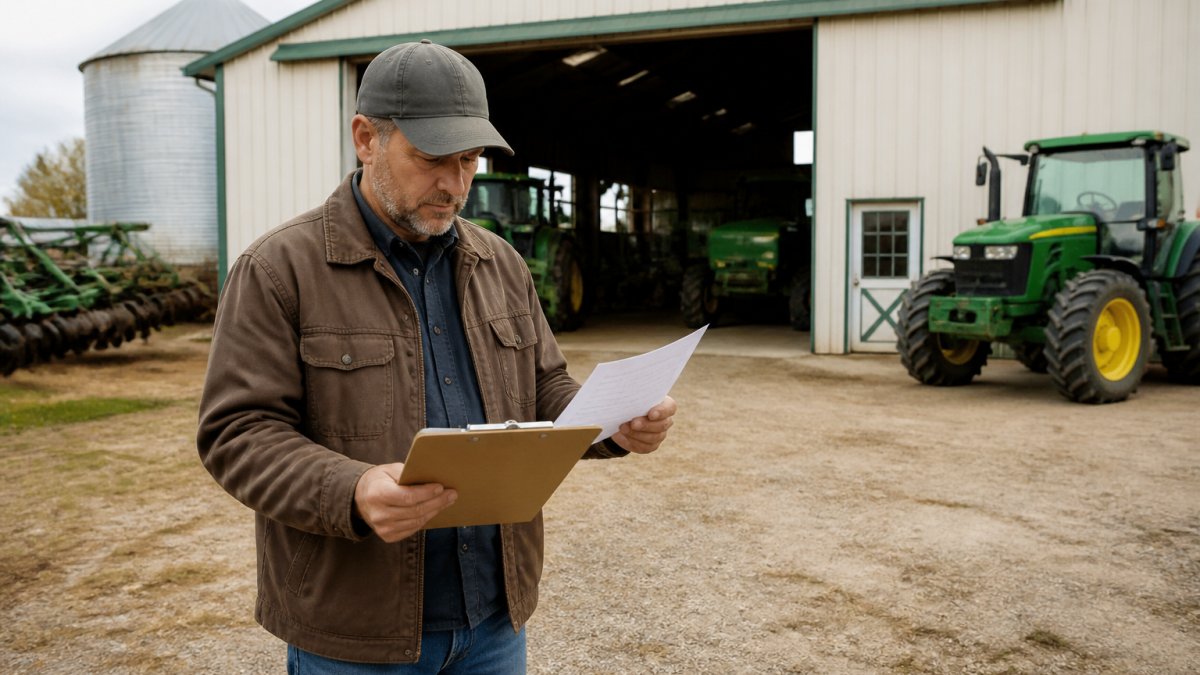
Step 1: List Your Farm Assets
Write down everything you own:
- Main residence and outbuildings
- Barns, sheds, grain bins, and storage
- Tractors, combines, and other equipment
- Livestock and animals
- Crops in the field or stored
- Vehicles and trailers
Step 2: Identify Your Farm Activities
Document what you actually do:
- Crop types and acreage
- Livestock types and numbers
- Any agritourism or farm events
- Farm stands or direct sales
- Equipment rental or custom work
- Value-added products or processing
Step 3: Assess Your Liability Exposures
Think about who comes on your property:
- Employees or hired workers
- Family members
- Visitors or customers
- Neighbors
- Contractors or service providers
Step 4: Evaluate Coverage Gaps
Compare what you own against what's covered:
- Does your homeowners policy exclude farm operations?
- Are all buildings listed and insured?
- Is all equipment covered adequately?
- Are specialty activities like agritourism covered?
- Is your liability limit high enough?
Step 5: Work With an Agent
This is where professional guidance matters. An experienced agent can:
- Review your current coverage
- Identify gaps and overlaps
- Recommend appropriate limits
- Explain exclusions and conditions
- Find the best pricing for your needs
Agricultural insurance coverage isn't one-size-fits-all. A diversified farm with agritourism needs different protection than a straight crop operation. A small livestock farm has different exposures than a large grain farm.
The checklist approach forces you to think systematically. You're less likely to forget important assets or activities. You're more likely to get coverage that actually matches your operation.
Protecting your farm requires more than a standard homeowners or commercial policy. Agricultural insurance coverage is built for farming's unique risks.
At Countryside Insurance Agency, we specialize in helping small farm owners understand their coverage needs. We work with you to build a protection strategy tailored to your operation.
Frequently Asked Questions
What types of insurance does a small farm actually need?
Most small farms need agricultural insurance coverage that includes property protection for buildings and structures, farm equipment insurance for machinery and tools, farm liability insurance for injury claims, and crop or livestock coverage if those are part of your operation. Many farms also benefit from revenue protection policies that cover income loss from weather or price fluctuations. Your specific needs depend on your farm size, activities, and assets, a personalized assessment helps identify gaps that homeowners or standard commercial policies won't cover.
Does farm insurance cover crops and livestock?
Farm insurance policies vary. Standard farm property policies typically do not cover crop losses from weather or disease; that requires separate crop insurance for small farms, often available through federal programs like the Risk Management Agency. Livestock coverage is also usually separate, you need specific livestock insurance to protect animals from death, disease, or theft. Revenue protection options exist for diversified farms that combine crop and livestock income. Check your policy exclusions carefully, as many standard farm policies explicitly exclude these exposures.
How much does agricultural insurance coverage for a small farm cost?
Farm insurance cost depends on farm size, location, revenue, buildings, equipment value, liability exposure, and claims history. A small diversified farm might pay several hundred to a few thousand dollars annually, while operations with significant equipment or livestock exposure pay more. Premium drivers include the replacement value of structures, the type of farm operation, and whether you have employees or host agritourism activities. Contact an independent agent for a personalized quote based on your specific exposures and coverage needs.
Can homeowners insurance cover a small farm operation?
Homeowners insurance typically will not adequately cover a farm operation. Most homeowners policies exclude business activities, farm equipment, liability from farm operations, and crop or livestock losses. If you operate any farm activity, even small-scale, you need agricultural insurance coverage designed for farm operations. Mixing homeowners and farm policies can leave critical gaps. An independent agent can review your situation and coordinate policies so nothing falls through the cracks between homeowners and farm coverage.